


Laser Cladding Repair Processing for Coal Mining Machine Sprockets
Contact Info
- Add:西安市国家民用航天产业基地航天基地299号西安建工科技创业基地十号楼4层, Zip:
- Contact: 段纯
- Tel:17392761868
- Email:gsjgkj@163.com
Other Products


I. Introduction
In the coal mining industry, the shearer is the core equipment, and the sprocket, as a key component of the shearer's traction system, operates for extended periods under harsh conditions such as heavy loads, high friction, and strong impacts, making it highly susceptible to issues like wear, corrosion, and tooth breakage. Traditional repair methods such as surfacing welding and thermal spraying suffer from drawbacks like low repair precision, weak bonding strength, and large heat-affected zones, making it difficult to meet the demands of modern coal mines for efficient and safe extraction. Laser cladding repair processing technology, with its unique advantages, offers a new solution for the repair of shearer sprockets, effectively extending their service life, reducing equipment maintenance costs, and holding broad application prospects in the coal industry.
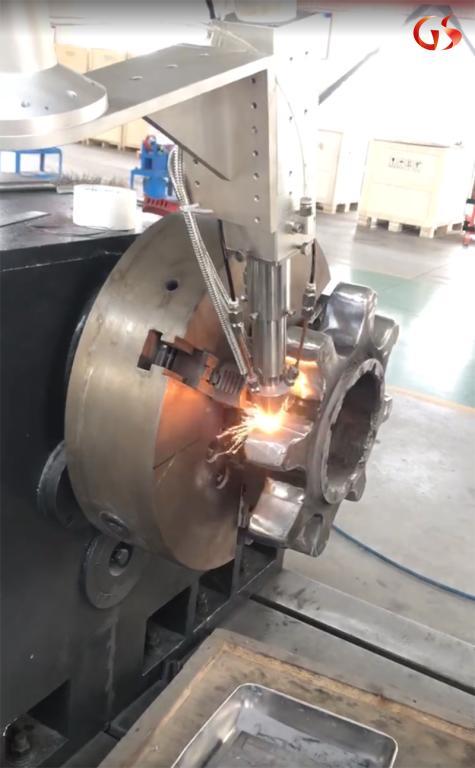
II. Principle of Laser Cladding Repair Processing
Laser cladding repair processing is based on the high-energy density characteristics of the laser beam, which rapidly melts alloy powder with specific properties and the surface of the shearer sprocket substrate, forming a high-performance cladding layer with a metallurgical bond to the substrate in an extremely short time. In this process, the laser beam acts as a heat source, instantly heating the alloy powder and the thin surface layer of the substrate to a molten state. Using the filling and melting of the alloy powder, a new coating with excellent wear resistance, corrosion resistance, and fatigue resistance is formed on the sprocket surface. Due to the short duration and concentrated energy of the laser, the heat-affected zone on the substrate during cladding is minimal, with low deformation, allowing precise control over the thickness, shape, and properties of the cladding layer, thereby achieving high-precision repair of worn or damaged sprockets.
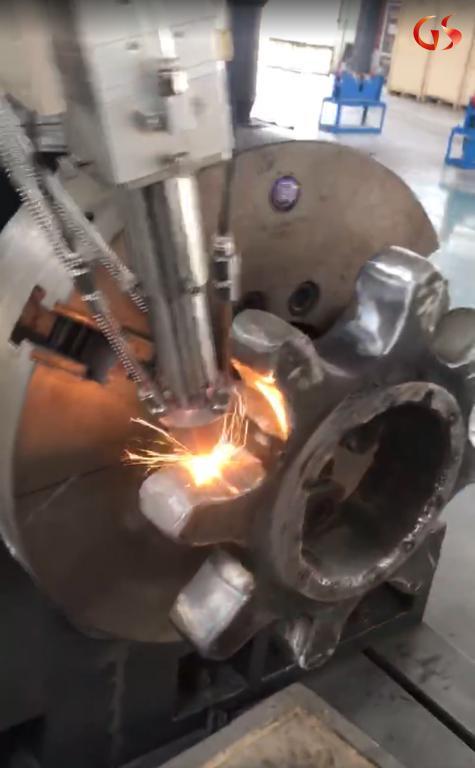
III. Process Flow of Laser Cladding Repair Processing for Shearer Sprockets
1. Sprocket Pretreatment
Cleaning: Use organic solvents (such as alcohol) to thoroughly clean the surface of the shearer sprocket, removing oil stains, rust, impurities, etc., to ensure surface cleanliness. This step is to ensure that the subsequent repair layer can bond better with the substrate. If impurities are present on the surface, they can hinder the formation of a metallurgical bond and reduce bonding strength.
Surface Roughening: Employ methods such as sandblasting or grinding to roughen the sprocket surface, increasing surface roughness and enhancing the bonding force between the coating and the substrate. Sandblasting typically uses quartz sand or aluminum oxide sand, sprayed onto the sprocket surface at a certain pressure to create micro-concave and convex structures, allowing the alloy powder to adhere and wet better during the cladding process.
Defect Assessment: Conduct a comprehensive evaluation of the sprocket's wear, cracks, and other defects using non-destructive testing techniques (such as ultrasonic testing or magnetic particle testing) to determine the repair areas and repair plan. For example, for sprockets with minor wear, single-layer cladding repair can be used; for severely worn or cracked sprockets, multi-layer cladding is required, along with special treatment for cracks.
2. Alloy Powder Selection
Based on the working conditions and performance requirements of the shearer sprocket, select the appropriate alloy powder. Commonly used alloy powders include nickel-based, cobalt-based, and iron-based alloys. Nickel-based alloy powders offer good corrosion resistance, wear resistance, and high-temperature performance, making them suitable for sprockets operating in corrosive environments; cobalt-based alloy powders have excellent wear resistance, high-temperature resistance, and thermal fatigue resistance, often used for repairing sprockets under high loads and high speeds; iron-based alloy powders are cost-effective and provide certain wear resistance and strength, making them suitable for applications with relatively lower performance requirements. Additionally, hard phase particles such as tungsten carbide or chromium carbide can be added to the alloy powder based on actual needs to further enhance the hardness and wear resistance of the cladding layer.
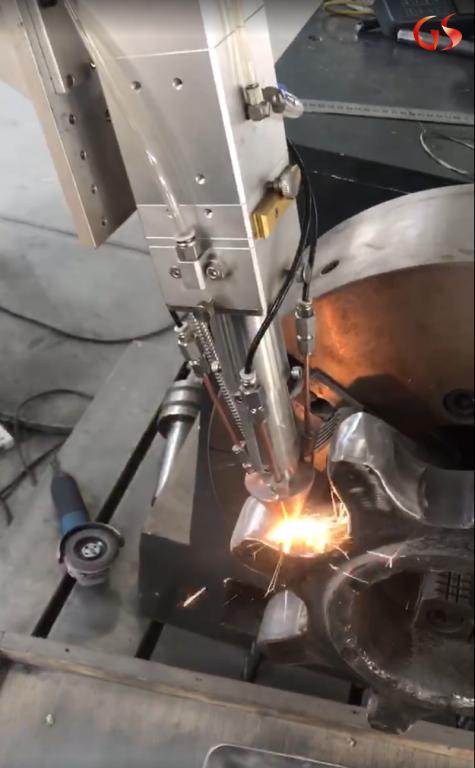
3. Laser Cladding Repair Processing
Equipment Calibration: Adjust the parameters of the laser cladding equipment according to the sprocket's size, shape, and repair requirements, including laser power, scanning speed, spot diameter, powder feed rate, etc. For example, for thicker cladding layers, increase the laser power and powder feed rate while appropriately reducing the scanning speed; for thin-walled parts or areas requiring high precision, reduce the laser power and increase the scanning speed to minimize the heat-affected zone and deformation.
Cladding Operation: Install the pretreated sprocket on the worktable, and use the powder feed system to deliver the alloy powder to the laser action area. Under the irradiation of the laser beam, the alloy powder and the sprocket substrate surface melt and rapidly solidify, forming the cladding layer. During the cladding process, control the overlap rate of the cladding layer, typically between 30% and 50%, to ensure the continuity and uniformity of the cladding layer.
Process Monitoring: Use equipment such as infrared thermometers and CCD cameras to monitor the cladding process in real time, tracking parameters like molten pool temperature and cladding layer morphology, and adjust the process parameters promptly to ensure cladding quality. For example, if the molten pool temperature is too high, it may lead to defects such as coarse microstructure or pores in the cladding layer, requiring a reduction in laser power or an increase in scanning speed; if the cladding layer surface is uneven, adjust the powder feed rate and scanning path.
4. Post-Processing After Laser Cladding Repair
Heat Treatment: To eliminate residual stress within the cladding layer and improve microstructural properties, perform heat treatment on the clad sprocket. Common heat treatment methods include annealing and tempering. Annealing can reduce the hardness of the cladding layer and improve plasticity and toughness; tempering can eliminate residual stress, stabilize the microstructure, and enhance the overall performance of the cladding layer. Heat treatment parameters should be selected appropriately based on the composition of the alloy powder and the thickness of the cladding layer.
Machining: According to the dimensional accuracy requirements of the sprocket, perform machining operations such as turning or grinding on the clad sprocket to achieve the designed dimensions and surface roughness. During machining, select suitable tools and cutting parameters to avoid damaging the cladding layer.
| Industry Category | Machinery & Equipment/General Mechanical Parts/Conveyor Belts |
|---|---|
| Product Category | |
| Brand: | 国盛激光 |
| Spec: | |
| Manufacturer: | 国盛激光 |
| Origin: | 116101 |


